How to Winterize Your Lawn Before the Ground Freezes
How to winterize your lawn by grass type: when to make the last mow, whether to fertilize, what to do with leaves and water, and how to avoid snow mold.
By Ramachandran A V · · Editorial policy
To winterize a lawn, keep mowing until the grass stops growing, rake or mulch fallen leaves before snow arrives, stop watering once the ground starts to freeze, drain hoses and irrigation lines, and keep foot traffic off frozen grass. What you do about fertilizer depends on your grass. Cool-season lawns get their key feeding in early fall. Warm-season lawns should get no nitrogen in fall or winter at all.
Most of the work happens in the few weeks before the ground freezes. Below is a step-by-step checklist, the differences between cool-season and warm-season grass, and the mistakes that cause most winter damage.
Winterize your lawn: the checklist at a glance
| Step | Cool-season grass (fescue, bluegrass, ryegrass) | Warm-season grass (Bermuda, Zoysia, St. Augustine, centipede) |
|---|---|---|
| Last mow | When top growth stops, usually late fall | When the lawn goes dormant and browns after the first heavy frost |
| Fertilizer | Main feeding in early fall. Late-fall feeding depends on your region (see below) | No nitrogen in fall or winter. Wait for spring green-up |
| Leaves | Remove or mulch them before snow covers the lawn | Remove or mulch them so they don’t mat down over dormant turf |
| Watering | Taper off; stop once the soil freezes | Little or none while dormant |
| Seeding | Early fall is best. Dormant seeding is possible in some areas | Wait until late spring |
| Traffic | Keep off frozen or frosted grass | Keep off frosted grass |
If you aren’t sure which column applies to you, our guide to cool-season vs warm-season grass explains the difference, or you can use our grass identifier guide to work out your grass type from its blades and growth habit.
Step 1: Time the last mow of the season
Keep mowing as long as the grass keeps growing. University of Wisconsin–Madison Extension’s fall lawn care and winter prep guide says to mow as needed until top growth stops. It also warns that lawns going into winter too tall are prime candidates for snow mold and for damage from voles, which tunnel through long grass under the snow.
The opposite mistake is scalping. Setting the mower a little lower for the last few cuts is fine, but don’t take the lawn down in one go. Keep following the one-third rule: never remove more than a third of the blade in a single mow.
How short should the final cut be?
- Cool-season lawns: University of Illinois Extension’s advice on preventing winter damage to lawns is to keep mowing until the grass is completely dormant, finishing at about 2 inches. Tall fescue needs more: NC State Extension says it should never be mowed shorter than 2.5 inches.
- Warm-season lawns: these grasses go dormant at the first heavy frost and turn brown. Once that happens they stop growing, so the last mow is simply the last time the lawn needed it. There’s no need to cut a dormant lawn shorter.
When the last mow is done, clean the mower deck, sharpen or replace the blade, and store the mower following its owner’s manual. A sharp blade on the first spring mow cuts cleanly instead of tearing the tips.
Step 2: Decide whether to fertilize (and when)
This is the step with the most conflicting advice online, because the right answer depends on your grass and your region.
Cool-season grass: feed in early fall
For cool-season lawns, fall is the most important feeding of the year. The question is how late to go.
University of Wisconsin–Madison Extension says early September was the key time to fertilize, and that nitrogen applied in mid-fall can leave grass too lush going into winter, raising the risk of winter damage and snow mold. Its advice for a lawn that missed the early-fall window is to wait until spring. University of Illinois Extension lists excessive fast-release nitrogen in early to mid fall among the causes of snow mold and recommends slow-release or controlled-release nitrogen. It also suggests a soil test to check phosphorus and potassium before you add them.
Other extension services recommend a later feeding in milder regions. NC State Extension’s tall fescue lawn maintenance calendar, for example, includes a November feeding, timed for when the grass is green but not actively growing. Because the advice differs by region, check your state’s extension service for the timing that fits your area rather than relying on a single date from a national product label. Whatever you apply, follow the product label and any local fertilizer rules, which in some areas restrict when and where you can apply fertilizer.
Warm-season grass: no nitrogen until spring
For Bermuda, Zoysia, St. Augustine and centipede, the answer is simple. NC State Extension’s lawn chapter of the Extension Gardener Handbook says to avoid fall or winter applications of nitrogen to reduce winter injury. University of Georgia Extension’s winter lawn care update puts it plainly: don’t fertilize or aerate warm-season lawns in winter, and that includes “weed and feed” products. Wait to fertilize until the lawn begins to green up in spring.
Fertilizers sold as “winterizer” products usually contain nitrogen too, so on a warm-season lawn the same rule applies: skip them until spring.
Step 3: Deal with fallen leaves
A thick layer of leaves left on the lawn over winter blocks light, holds moisture against the grass and can smother it. University of Wisconsin–Madison Extension recommends removing fallen leaves and other debris before snow covers the lawn, because leaves left through winter can encourage disease.
You have two options:
- Rake or blow them off and compost them or use them as mulch in beds.
- Mulch-mow a light layer so the chopped pieces settle between the blades. This works when you can still see grass through the shredded leaves. If you can’t, there are too many to mulch in place, so remove some.
Do this before the first lasting snow. Leaves frozen to the lawn under snow are much harder to clear in spring, and matted areas are where disease tends to show up first.
Step 4: Taper watering and shut down irrigation
Grass uses much less water as it slows down in fall. Count rainfall, water only when the lawn actually needs it, and stop once the soil begins to freeze. Our lawn watering guide covers how to measure what your sprinkler puts down.
Dormant warm-season lawns in mild-winter areas need very little water. Rain usually covers it, so water only lightly if a winter dry spell runs on for several weeks and the soil is not frozen.
Before the first hard freeze:
- Disconnect and drain garden hoses, and store them out of the sun.
- Shut off and drain outdoor faucets if your home has a separate shutoff.
- Winterize an in-ground irrigation system. Many systems are cleared with compressed air; if you aren’t sure how yours should be drained, follow the manufacturer’s instructions or use an irrigation professional.
Step 5: Seed bare spots only if the timing still works
Early fall is the best time to seed cool-season lawns, so by November most of that window has passed. University of Wisconsin–Madison Extension describes late-fall dormant seeding as an option: seed sits in the soil over winter and germinates in spring. Its guide notes that results depend on winter conditions, and the method works best when snow falls soon after seeding and stays until spring. Otherwise, wait until spring.
Warm-season grasses are seeded, sodded or plugged in late spring and early summer, once the soil has warmed. Patching them in fall or winter rarely works.
If you used a preemergent herbicide this fall, check its label before seeding. Many preemergents also stop grass seed from germinating for a set period.
Step 6: Protect the lawn from winter damage
Several common winter problems can be prevented with a few habits.
Snow mold
Snow mold is a group of fungal diseases that show up as matted, crusty, straw-colored or pinkish patches as snow melts. University of Illinois Extension names gray snow mold (Typhula blight) and pink snow mold (Fusarium patch) and lists the conditions that make it worse: excessive fast-release nitrogen in early to mid fall, heavy thatch, shade, poor drainage, debris left on the turf, and drifting or piled snow.
That makes most of this checklist snow mold prevention: mow until growth stops, don’t overfeed late, and clear leaves. When you shovel or plow, spread snow out rather than building a tall pile on the same patch of lawn all winter.
Voles
Voles are small rodents that feed on grass under the snow. University of Illinois Extension describes their damage as runways or winding trails of damaged grass that appear when the snow melts. Most lawns recover in spring. Keeping the grass from going into winter too long and cutting back dense vegetation at the lawn edge removes the cover they use.
Foot traffic and de-icing salt
Frozen grass blades are brittle, and walking or driving on frosted or frozen turf can crush them, leaving footprints that turn brown. Use paths for winter walking, and park and turn vehicles off the lawn.
De-icing salt that ends up on the lawn edge along driveways and sidewalks can leave brown strips in spring. Use it sparingly, shovel salty slush onto pavement rather than onto the grass, and follow the product’s label.
Step 7: Plan your spring check-up
Winterizing ends with a note to yourself for spring. When the snow melts:
- Rake matted areas lightly so they dry out.
- Look for patches that stay brown after the rest of the lawn greens up. Our guide to brown patches in your lawn explains how to tell disease, grubs, drought and other causes apart.
- Hold off on fertilizer until the grass is actively growing. Our month-by-month lawn care calendar shows when the spring tasks start for each grass type.
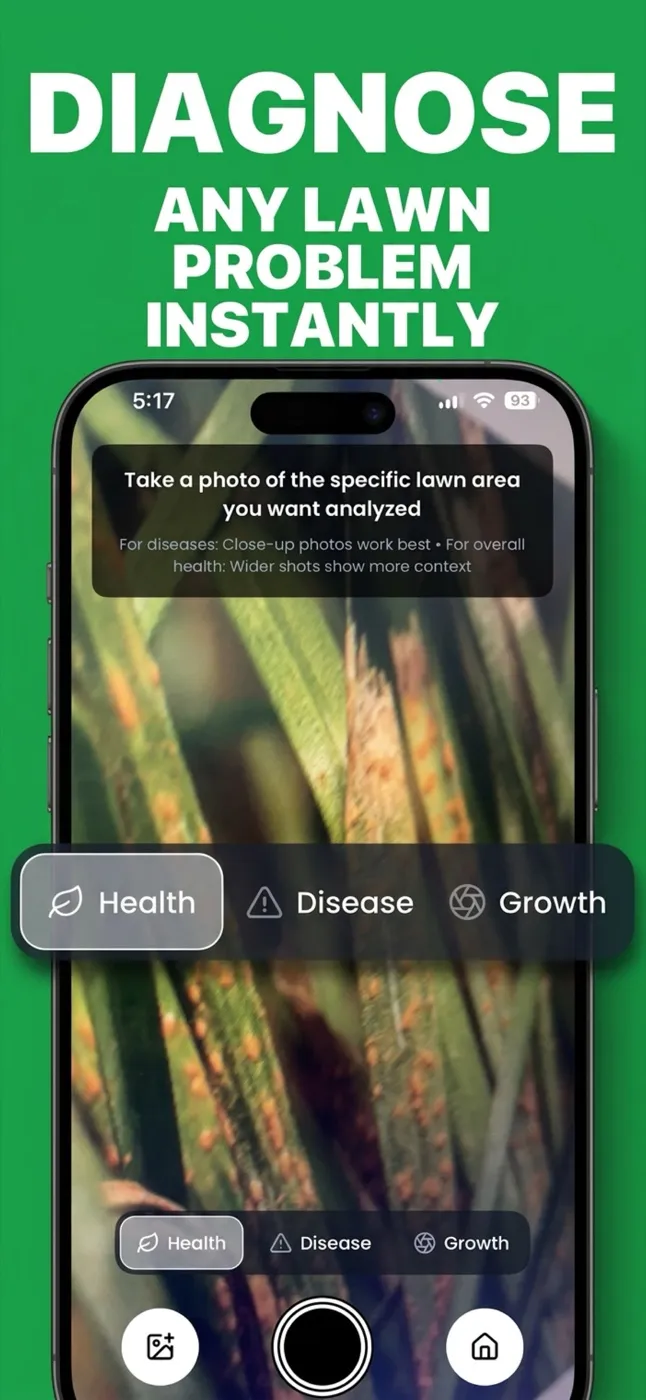
If a patch looks like disease, a close-up photo can help. Grass X, our iPhone app, can identify your grass type and flag visible disease, weed and pest damage from a photo; our roundup of lawn disease identification apps compares it with other options.
Winter lawn care by region
Timing in this guide follows frost and the ground freezing, not the calendar, so it shifts with where you live:
- Northern US and Canada: most of these steps happen from October through November, before the ground freezes.
- UK and other mild maritime climates: the ground often doesn’t freeze for long, so time the steps to the first frosts and to when the grass stops growing.
- Transition zone (where both grass types grow): cool-season lawns follow the cool-season column; warm-season lawns like Zoysia and Bermuda turn brown after the first frosts, earlier than cool-season lawns nearby, and should not be fed in fall.
- Gulf Coast, Florida and the Southwest: warm-season lawns may not go fully dormant in mild winters. The no-winter-nitrogen rule still applies; mow occasionally if the grass is still growing.
- Southern Hemisphere: in Australia and New Zealand it is late spring now, so this checklist applies in late autumn, roughly April to June depending on where you live.
A lawn care schedule app can handle this timing for you. Grass X builds its plan around your local frost data and climate, adjusts it for warm- or cool-season grass, and pauses tasks during dormancy or snow, so you aren’t reminded to mow or water a frozen lawn.
Frequently asked questions
When should I winterize my lawn?
Start a few weeks before your area’s typical first hard freeze, while the grass is still growing. For most cool-season lawns in the northern US, that means October and November. The last steps, such as the final mow and shutting down irrigation, happen just before the ground freezes.
Should I use a winterizer fertilizer?
It depends on your grass. On cool-season lawns, the most important feeding is in early fall; some extension services advise against mid- or late-fall nitrogen because it raises the risk of snow mold, while others, such as NC State for tall fescue, include a November feeding. On warm-season lawns, don’t use winterizer or any nitrogen fertilizer in fall or winter. Check your state extension service and follow the product label.
How short should I cut my grass for winter?
Don’t scalp it. University of Illinois Extension suggests finishing the season at about 2 inches for its lawns, and NC State Extension says tall fescue should never be mowed shorter than 2.5 inches. Lower the height gradually over the last few mows, removing no more than a third of the blade at a time.
Should I leave leaves on my lawn over winter?
No. A thick layer can smother the grass and encourage disease. Rake them off, or mulch-mow a light layer so the pieces settle between the blades, before snow covers the lawn.
Do I need to water my lawn in winter?
Usually not once the ground is frozen. Dormant warm-season lawns in mild-winter areas may need a light watering during a long dry spell, but rain usually covers it.